
trauma responsive & healing centered - Initiating
Learning Playlists > Trauma Responsive & Healing Centered – Initiating
Creating a trauma-responsive and healing-centered school culture begins with cultivating self-awareness, individually and collectively. Research shows that when educators understand the impact of trauma on the brain and learning (Perry & Szalavitz, 2017), engage in reflective practice to build emotional resilience (Jennings, 2015), and shift from trauma-informed approaches to healing-centered engagement (Ginwright, 2018), they are better equipped to foster environments of safety, connection, and growth.
This Initiating playlist introduces schools to the core concepts of trauma-responsive and healing-centered education. Emphasizing self-awareness as a foundational practice, this stage encourages educators and leaders to reflect on their beliefs, experiences, and biases as they build a shared understanding of trauma’s impact on learning. Resources support the exploration of key frameworks, resilience-building strategies, and whole-school approaches that foster emotional safety and belonging.
The resources below are recommended for schools or districts starting in this work. Your school or district may be exploring this work and wondering where to begin. These resources focus on building an understanding of the shared goals as well as difference between the concepts of trauma responsive and healing centered. The resources here focus on the importance of self-awareness in this work, and how to develop self-awareness. Click here for our Action Planning Guide to help you through the process of creating an action plan that will help your school move towards becoming a more resilience-supportive school community.

- 30 minutes
The TRS-IA is an evidence-informed self-assessment that comprises eight key domains of trauma-responsive schools and districts. It encompasses 8 domains: 1) whole school prevention planning; 2) whole school safety planning; 3) whole school trauma programming; 4) target trauma-informed programming; 5) prevention/early intervention trauma programming; 6) classroom strategies; 7) staff self-care; 8) family and community engagement. Click here for the Assessment Guide to help your team through this process.
You can take the TRS-IA on the RSSI site at www.rss-illinois.net. Download a copy of the assessment here. For more information about the School Mental Health Quality Assessment, visit the SHAPE System at the National Center for School Mental Health by clicking here.

This course covers information needed to fulfill the mandate created by Illinois Public Act 103-0413, which was signed into law in August 2023. The law creates common definitions around trauma-responsive environments. Starting with the 2024-2025 school year, teacher institutes need to provide instruction on trauma-informed practices and include the definitions of trauma, trauma-responsive learning environments, and whole child.
- 15 minutes

- 8 minutes
The past several years have been incredibly turbulent, as we’ve faced Covid, racial violence, political upheaval, environmental disasters, war, and more. Anxiety and depression have skyrocketed. Organizations have had to confront issues they never expected and find new ways to support their employees through repeated traumatic experiences. The reality, though, is that trauma is not new in our organizations. It’s not going away, either. Estimates are that six in 10 men and five in 10 women experience at least one trauma, and approximately 6% of the population will experience PTSD at some point in their lives. As we’ve seen the lines between work and home blur and a fundamental shift in our expectations of the places we work, organizations have struggled to provide the support and leadership their employees need. That’s why it’s so important to take steps now to build the cultures that can see them through current and future crises. To do that, we need to build trauma-informed organizations.

- 2 minutes
Adopting a trauma-informed approach is not accomplished through any single particular technique or checklist. It requires constant attention, caring awareness, sensitivity, and possibly a cultural change at an organizational level. On-going internal organizational assessment and quality improvement, as well as engagement with key community collaborators, will help to imbed this approach which can be augmented with organizational development and practice improvement. This infographic illustrates SAMHSA’s six principles that guide a trauma-informed approach.
6 Guiding Principles to a Trauma Informed Approach Infographic

All young people should feel like they belong — that they are welcome and recognized as human beings with strengths, potential and aspirations. Yet, this isn’t a given for young people of color, whose culture, history and accomplishments are often absent or unrecognized by the people and places shaping their everyday lives. This post explores what it would look like to advance racial equity in ways that would create places to live, work and play where every young person feels both welcome and included.
Creating a Sense of Belonging – The Annie E. Casey Foundation
- 5 minutes
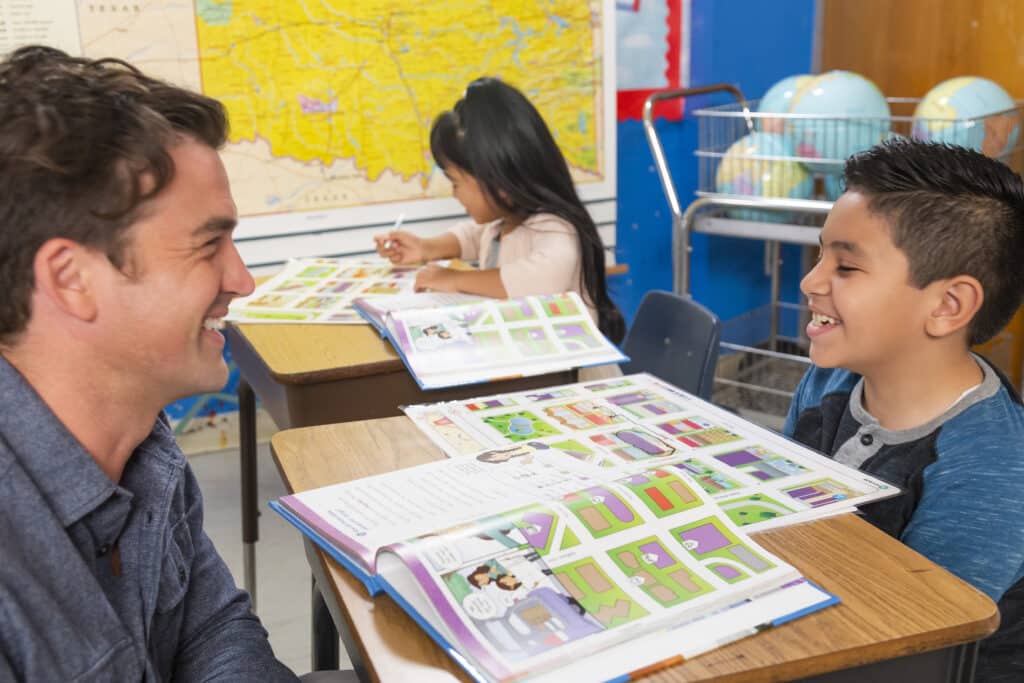
Trauma is an issue of equity: it impedes educational attainment on its own, and disproportionately targets students of color, students with disabilities, those living in poverty, LGBTQ+ students, and others who experience marginalization. Supporting young people’s right to full learning requires a foundational shift in the way we view difficult classroom behaviors and learning struggles. This article outlines key points and activities to consider when building trauma informed classroom that include inclusive learning strategies for educators.
- 10 minutes

This is an introduction to a guide to healing-centered engagement, an innovative mental health model, based on Dr. Shawn Ginwright’s work. The scope and complexity of the problem of the prevalence of trauma means there will never be enough therapists to cope with it. Instead, Ginwright has a different vision: democratizing access to mental health care so that conversations focused on emotional well-being can occur wherever young people gather with other peers or adults, whether that be in a barbershop, a beauty salon, a basketball court, or on a bus. This short reading provides five on how implementing this practice helps young people. On this webpage you can also find a link to access a free healing centered toolkit.
Tackling Unhealed Trauma | Harvard Graduate School of Education
- 5 minutes

As educators, we talk a lot about resilience—how students need it to bounce back from challenges, grit their teeth, and persevere. But what if resilience isn’t just about bouncing back? What if it’s about bouncing forward, adapting, thriving, and growing stronger with each setback? The good news is that resilience isn’t some mystical trait. It’s a skill—a muscle, if you will—that we can strengthen in our students. The strategies we utilize in the classroom are the ultimate training ground. Teachers can use these strategies to strengthen their students’ ability to cope with setbacks and frustration.
Build Students’ Resilience With 6 Classroom Strategies | Edutopia
- 4 minutes

The Trauma-Informed, Resilience-Oriented Schools Toolkit from the National Center for School Safety outlines a framework for implementing these approaches in any school or school district. It utilizes tools, videos, professional development slide decks, and concise instruction to explain the concepts of trauma and toxic stress, offers individual
and school-wide strategies for addressing trauma and fostering resilience for students, staff, and families, and to assess the impact of these adaptations throughout the school community. The sections’ topics are presented in the order your school or district will likely start to address them.
- 25 minutes

This webinar delves into implicit biases—the subconscious biases we all have that influence how we respond to others. To create equitable classrooms, educators must acknowledge their own biases and take steps to confront them. Better understand what implicit bias is and how it affects school climate as well as ways to confront implicit bias within ourselves and help students to do likewise.
Equity Matters: Confronting Implicit Bias | Learning for Justice
- 30 minutes
