
Classroom Strategies

The Psychological Effects of the Conflicting Stories We Hear

Researchers have a term for the sense of security that arises when the way that our caregivers help us make sense of the world is consistent with how the world actually is: “epistemic trust.” This epistemic trust—being able to rely on the validity of what we experience and what we see and hear as related to us by those in a position of authority—is at our developmental core how we come to feel secure within ourselves, to trust others, and to feel at home in a world that makes sense. This information can be extrapolated for educators as they navigate a highly political environments and news stories with their students.

The Psychological Effects of the Conflicting Stories We Hear Read More »
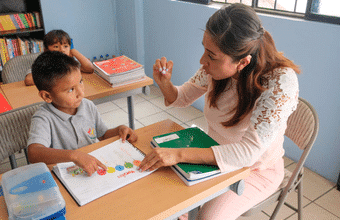
Cultivating Positive Teacher–Student Relationships: Preliminary Evaluation of the Establish–Maintain–Restore (EMR) Method

Strong teacher–student relationships have long been considered a foundational aspect of a positive school experience. The aim of the current study was to evaluate the effects of the establish–maintain–restore (EMR) method for improving teacher–student relationships and students’ classroom behavior while providing elementary teachers with structured professional development and follow-up support.

Cultivating Positive Teacher–Student Relationships: Preliminary Evaluation of the Establish–Maintain–Restore (EMR) Method Read More »

Creating a Relationship Map

Use this Google doc to create a tool to start the Establishment, Maintaining, Restoring (EMR) Phase with students. EMR is a specific framework for understanding student-teacher relationships in which three dimensions of relationships are highlighted: establishing the relationship through positive interactions, maintaining the relationship with continued support and encouragement, and restoring the relationships as needed.

Creating a Relationship Map Read More »

Scroll to Top